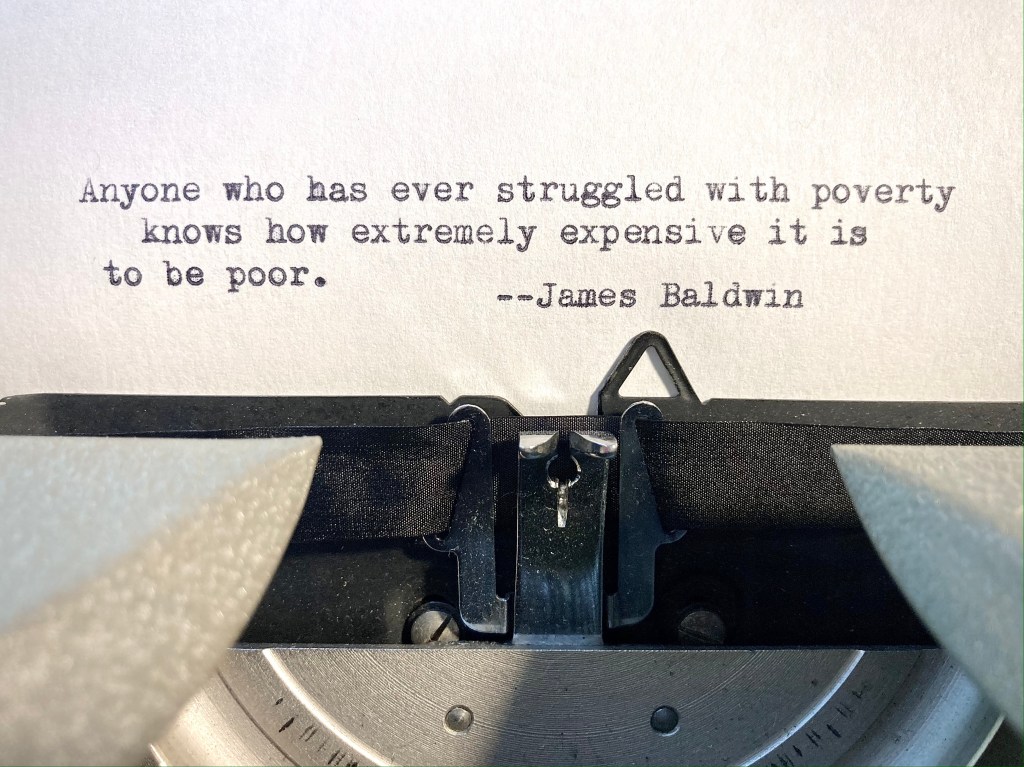
For several years in my early twenties I worked at Starbucks. It was a decent paying job and gave full benefits to employees working a minimum of 20 hours a week which, in the early aughts, was a rare thing. I had access to an amazing healthcare plan for $30 a paycheck, had dental and eye care covered, and participated in the stock option program. When you added in tips I ended up making several dollars an hour over minimum wage, which wasn’t bad for back then (but which is bad now because minimum wage hasn’t been raised since 2009 in Tennessee but cost of living is up about a kajillion percent. But I digress…).
When I worked at a store across from a major university in town, I got scheduled for a lot of opening shifts, which meant waking up hours before the sun rose to get to work. One morning, I arrived to open the store and found a note on the schedule book letting me know we had an incoming new hire that was training on the floor with us that day. As my coworker and I waited for the new person to arrive, we began going through our routine to open — brewing coffee, setting out the pastries, making sure the fridge was stocked. Twenty minutes goes by and we don’t see the new person yet. It’s time to unlock the doors and we start to panic because she still hasn’t arrived. Alas, the show must go on, so we open the doors and take the kind of deep breath that you take when you know you’re about to face the maelstrom short handed. Anyone who has worked retail knows the gut punch feeling of being short staffed during a rush. And for everyone else, you surely know what it’s like to wait too long in line for coffee at Starbucks, but you do it anyway, and are extra nice to the baristas and tip them really well because they are clearly struggling to keep up (right? RIGHT??).
Anyway, at this point I’m starting to get a little salty because the customers tend to take it out on you when they need their coffee at 5am and you’re not getting it into their veins quickly enough. Eventually, an over an hour late, the new hire walked in the door. By this point my manager had arrived to help us out so I let her deal with the new girl, whom she promptly fired and sent back home.
It turns out this very young woman didn’t have a car so she had taken the bus to get to work that morning and the bus was late. And the bus being late cost her a really good job with better-than-average pay and excellent benefits. At the time I was simply irritated and thought the usual things people think when they aren’t using appropriate empathy skills:
Why didn’t she call someone for a ride?
Why didn’t she get up earlier if she knew the bus takes so long?
Why is she applying for this job if she can’t get reliable transportation?
Doesn’t she realize how badly she’s screwing everyone else over when she doesn’t show up on time?
I was thinking about me. About how you can’t serve a line of customers backed up to the street when you’re a man down. In fact, you can barely do the job properly when you’re adequately staffed, and only then can you do it when you have all the resources you need to complete the task. But, when you run out of milk and you have five lattes in the queue, but have to send the other girl working the bar back into the walk-in cooler to look for a certain pastry instead of marking cups and prepping drinks for you, but now you’re out of sugar-free-vanilla which is going to piss off half the college girls in line if you can’t find another bottle, but the guy on register ran out of quarters and has to find someone with a safe key to get him some change, but that person is you but your whip cream container just ran out and you need someone to stop what they’re doing and make more before you can finish this Frappuccino™, but the person on their 10 minute break is taking too long, and now the person in the drive through just ordered 11 drinks for the entire office right as the district manager saunters in and wonders loudly why the line hasn’t moved for 10 minutes so someone is about to get a serious talking to. There are so many cogs, too many moving parts in the wheel for things to run smoothly all of the time. When one thing goes awry, it threatens to spin everything else off its course. It’s stressful and its chaos and it never stops, but you keep putting one foot in front of the other because what choice do you have?
And then I realized, not in that moment, but thinking about what happened to that girl all these years later, the way I just described working at a place like Starbucks — the unrealistic expectations, the chaotic environment where you’re constantly expected to do more with less, the unrelenting onslaught that is working food service or retail — what an apt analogy for what it’s like living in poverty.
I’m basically describing the quintessential paycheck-to-paycheck life.
When you drive a crappy car and your rent just went up but you didn’t get scheduled for as many shifts as you need to cover the bills and your check engine light lightbulb went out — there’s nothing wrong with your engine, mind you, just a bloody burnt out bulb — so you can’t pass emissions* without a $250 trip to the dealer to get the bleeding lightbulb replaced, AND you have to figure out how to spend half a day without a vehicle while it gets fixed, and on and on and on it goes.
Unfortunately, when you’re broke, you don’t get to leave the stress behind at the end of your shift. It’s a relentless specter that haunts you day and night and never lets up.
So, here’s what I’m getting at. I know a little of what it’s like to live paycheck to paycheck. The check engine light lightbulb story happened to me and is just one of over a dozen examples of my car failing emissions. There have been countless times that I didn’t know how I was going to make ends meet at the end of the month. But every time that happened, I had the privilege of knowing that if things got too tight I always had a support system to fall back on — whether I needed to borrow money from my parents, or move back in with them for a few months, or have a friend of a friend tinker with my car to save a little cash. When you have that type of safety net automatically built in to the community into which you were born, it can be really difficult to imagine navigating life without it.
And yet living without a safety net is the bitter reality for so many people living right here in the richest country in the world — one paycheck away from complete destitution. And NOT because they aren’t trying. Simply because Lady Luck went out for lunch and decided not to come back for the rest of the day. Because the car they bought was a lemon. Because a kid got sick and there was no one to babysit and skipping work cost them their job. Because the money it cost to treat the sick kid was supposed to be for the electric bill.
Because public transportation in most places — if it even exists — cannot be relied upon to get you to work on time.
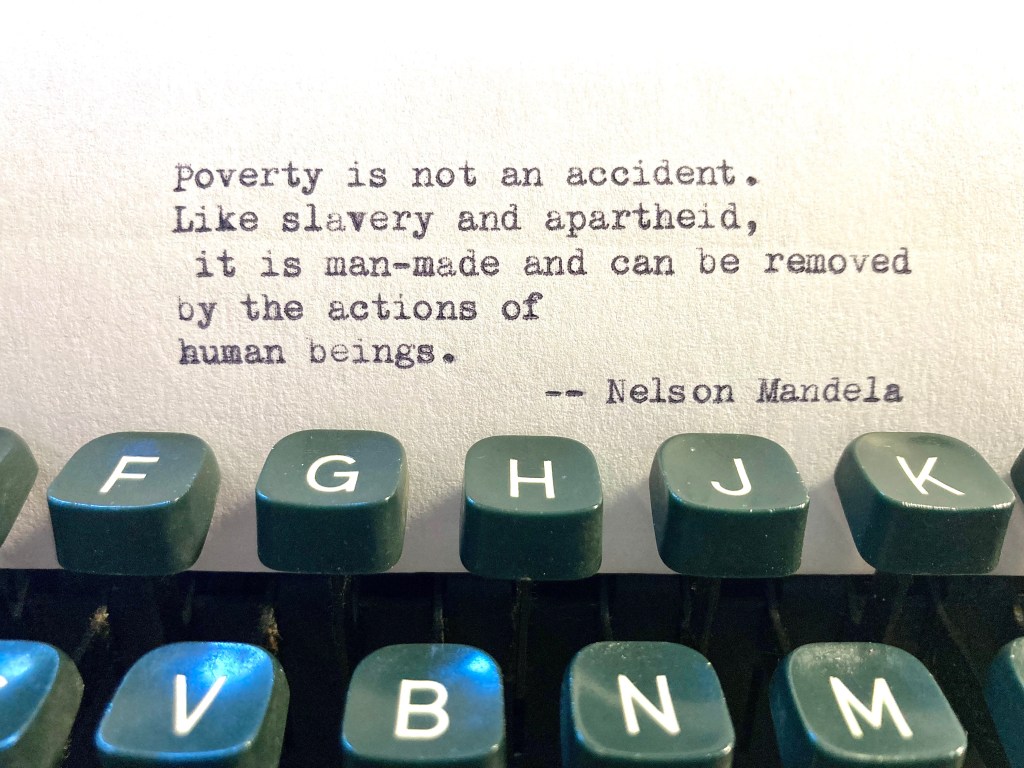
I don’t know if I have a clever moral to this story, and I definitely don’t have an easy solution. But I do think that we often don’t realize how expensive poverty can truly be. The penalties come in the form of criminally high interest rates, overdraft fees, and overly laborious red tape to access basic benefit programs. They make it next to impossible to bootstrap your way out of starting from behind. They make it that way on purpose. Because it’s profitable. Because they can. Because conservative policies encourage it. Because you knew I had to bring this all back around to why Republicans suck. Because you aren’t the “pro-life, pro-family” party when you vote for people and policies that intentionally keep vicious poverty cycles the status quo when it would be so easy to offer relief instead.
We have the resources. We have the ability. We just don’t have the consensus.
It doesn’t have to be like this.
*Side note: the state of Tennessee just removed the emissions requirement for vehicle registration which is excellent news because, for all its pro-clean-environment intentions, in reality it was just a poor tax that placed an undue burden on people who can only afford crappy, environmentally unfriendly cars. But that is a whole can of worms we can unpack on another day…

 WESTPHALL